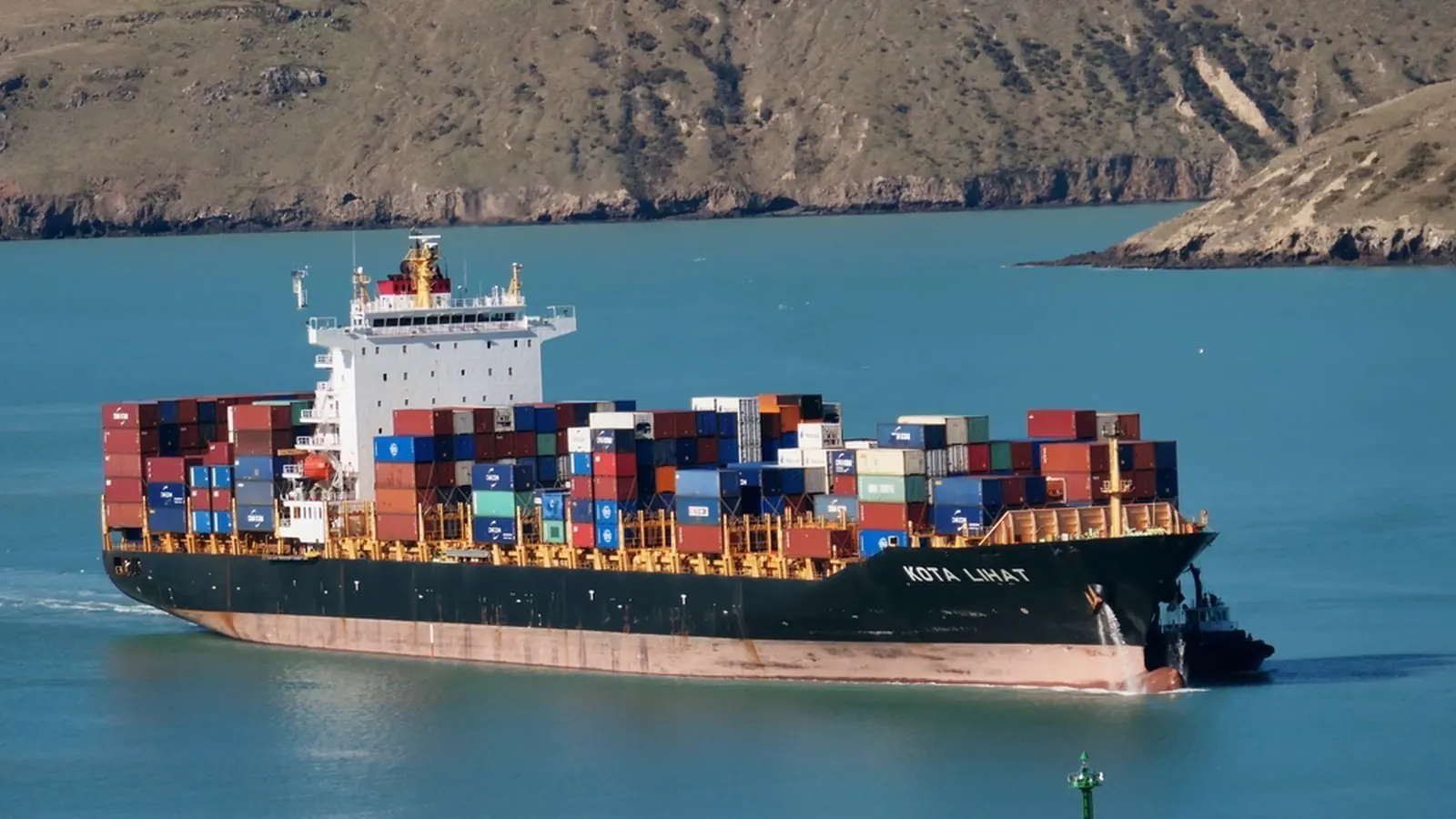
AI for maritime and shipping
We build AI for shipping that optimises vessel performance, automates maritime procurement, and brings marine logistics intelligence to port and fleet operations.
- Typical time to production
- 3 to 8 wks
- Chandler quote turnaround
- 30 min
- Line items in a single RFQ
- 847+
- Annual labour recovered
- $100K+
In short
How is AI used in shipping and maritime?
Explore the solution behind this work: our automation solutions.
Use cases
What maritime and shipping AI use cases do we deliver?
From bridge to back office: AI across the full maritime value chain.
Vessel performance and fuel optimisation
ML models that analyse AIS data, weather routing, and engine telemetry to recommend optimal speed and trim, cutting fuel consumption and emissions.
- Optimal speed and trim recommendations
- CII rating improvement support
- Real-time voyage optimisation
Ship chandler and procurement automation
AI-powered RFQ automation, catalogue item-code matching, and margin-protected quoting for ship supplies, removing manual back-and-forth at port.
- Quote turnaround from 2 to 3 days to under 30 minutes
- Zero pricing errors since go-live
- $100K+ annual labour recovered per deployment
Predictive maintenance for vessels
IoT sensor data analytics that predict equipment failures before they cause unplanned downtime, keeping vessels in service and crews safe.
- Early equipment failure prediction
- Condition-based maintenance scheduling
- Spare parts inventory optimisation
Port operations and berth scheduling AI
Predictive berth planning, yard optimisation, and vessel arrival forecasting that reduces port congestion and turnaround time.
- Reduced vessel waiting time
- Optimised crane and labour allocation
- Real-time port congestion alerts
Maritime compliance and flag state reporting
Automated IMO compliance monitoring, MARPOL reporting, and CII / EEXI calculation, removing the burden of manual regulatory submissions.
- Automated CII/EEXI reporting
- MARPOL compliance tracking
- PSC inspection readiness scoring
Marine logistics and charter intelligence
AI market intelligence for freight rate forecasting, charter party analytics, and cargo matching, giving chartering and marine logistics teams a data edge.
- Freight rate trend forecasting
- Automated charter party review
- Cargo-to-vessel matching
Our work
Maritime work and products
Ship chandler RFQ automation
Case study
Automated the end-to-end RFQ process for a maritime distributor, cutting quote turnaround from 2 to 3 days to under 30 minutes across 847+ line items, with zero pricing errors and $100K+ in annual labour recovered per deployment.
Maritime AI automation platform
Product
Our purpose-built AI platform for ship chandlers and maritime distributors: AI RFQ processing, catalogue item-code matching, margin-protected quoting, catalogue management, and order fulfilment. Deployed in an average of one week.
Capabilities
AI for ship management, fleet operations and marine logistics
The specific capabilities maritime teams ask us for, explained plainly.
AI for ship management and fleet management
AI for ship management pulls vessel telemetry, AIS positions, crew and maintenance records into one operating picture, then flags the vessels and systems that need attention first. For maritime fleet management using AI, that means fleet-wide performance benchmarking, automated noon-report analysis, and predictive maintenance across every hull, so shore teams manage by exception instead of chasing spreadsheets.
Maritime AI analytics
Maritime AI analytics turns raw operational data (fuel, speed, weather, port calls, cargo) into decisions: voyage and bunker optimisation, CII and emissions trend analysis, and plain-English answers over your own fleet data. We build the pipelines and the dashboards, so analysts get answers in seconds rather than building reports for days.
Marine logistics AI optimisation and supply chain intelligence
For marine logistics AI optimisation we model freight rates, cargo-to-vessel matching, laytime and demurrage, and port congestion to give chartering and operations teams a supply chain maritime intelligence edge. The result is fewer idle days, tighter scheduling, and earlier warning when a route or berth is about to slip.
Maritime workflow and shipping automation
Maritime workflow automation and AI shipping automation remove the manual, document-heavy work that slows ship operators and suppliers: RFQ and quote generation, invoice and bill-of-lading processing, compliance submissions, and email triage. Our ship-supply product Tidal shows this end to end, turning an inbound RFQ into a coded, priced quote in under 30 minutes.
Technology
Technology stack
- AIS data integration
- IoT sensor pipelines
- Azure IoT Hub
- Python / TensorFlow
- Weather API integrations (ECMWF, DTN)
- SAP MM / Oracle Procurement connectors
- Power BI maritime dashboards
- GPT-5 / Claude for document intelligence
FAQ
Maritime and shipping AI: common questions
Use cases, deployment time, integrations and what ship chandler automation includes.
How is AI used in shipping and maritime?
AI in shipping and maritime spans the full value chain: vessel performance and fuel optimisation from AIS and engine telemetry, ship chandler and procurement automation, predictive maintenance from IoT sensor data, port operations and berth scheduling, compliance reporting (CII/EEXI, MARPOL), and marine logistics intelligence for freight and chartering. Agility builds these as production systems in 3 to 8 weeks, integrating the data sources and back-office systems you already run.
What is ship chandler RFQ automation?
Ship chandler RFQ automation uses an AI email-parsing engine to read inbound RFQs, extract every line item, match catalogue item codes, and generate margin-protected quotes automatically. For a maritime distributor we cut quote turnaround from 2 to 3 days to under 30 minutes, processed 847+ line items in a single RFQ, and recovered $100K+ in annual labour per deployment with zero pricing errors since go-live.
How long does a maritime AI project take to deploy?
Agility deploys production maritime AI in 3 to 8 weeks depending on scope. Our ship chandler automation platform is validated in parallel with your existing process and cut over once confidence is established, an average of one week per client. Larger vessel-performance or port-operations builds sit at the upper end of the 3 to 8 week range depending on data readiness.
Which maritime and marine logistics systems can you integrate?
We integrate AIS data feeds, IoT sensor pipelines, weather routing APIs (such as ECMWF and DTN), and procurement systems including SAP MM and Oracle Procurement, alongside vendor catalogue and email integrations for chandling. Deployments run cloud-hosted or on-premise with document intelligence on modern LLMs and dashboards in Power BI.
What is AI for ship management?
AI for ship management uses machine learning over vessel telemetry, AIS data, and maintenance and crew records to give shore teams one live operating picture, highlighting the vessels and equipment that need attention first. It underpins maritime fleet management using AI: fleet-wide performance benchmarking, automated noon-report analysis, and predictive maintenance across every hull.
What is maritime AI analytics?
Maritime AI analytics converts operational data such as fuel, speed, weather, port calls and cargo into decisions: voyage and bunker optimisation, CII and emissions trend analysis, and plain-English answers over your own fleet data. Agility builds both the data pipelines and the dashboards, so analysts get answers in seconds instead of building reports for days.
How does AI optimise marine logistics and shipping automation?
Marine logistics AI optimisation models freight rates, cargo-to-vessel matching, laytime, demurrage and port congestion to cut idle days and tighten scheduling. Alongside it, maritime workflow and shipping automation remove document-heavy manual work, RFQ and quote generation, invoice and bill-of-lading processing, and compliance submissions, so operators and suppliers move faster with fewer errors.
Ready to bring AI to your maritime operations?
Production-ready maritime and shipping AI in 3 to 8 weeks. Let's start with your biggest operational challenge.