
AI Consulting in Durban
Production-grade, POPIA-aware AI for Durban's logistics, ports, manufacturing, automotive and agri-processing sectors, shipped in 3 to 8 weeks on SAST hours.
- Typical time to production
- 3 to 8 wks
- AI deployments delivered
- 200+
- Working hours, UTC+2
- SAST
- Aware by design
- POPIA
In short
AI services in Durban
Part of our South Africa AI coverage.
Why Durban
AI for South Africa's logistics and manufacturing gateway
Durban is the trade gateway of southern Africa. The Port of Durban is the busiest container port in sub-Saharan Africa, handling on the order of 60 to 65% of South Africa's container traffic, and the city sits at the centre of the country's most important logistics corridor. Around it are heavy manufacturing and automotive production, including Toyota's Prospecton plant, which builds roughly 220,000 vehicles a year, the Dube TradePort special economic zone and aerotropolis, and established automotive and chemicals clusters. This is a city that runs on moving physical things efficiently, at scale.
In 2026, AgilityTech helps Durban's operators make those flows smarter with production AI: optimization, forecasting, predictive maintenance and document intelligence, delivered from scoping to production in 3 to 8 weeks, with 200+ deployments behind us. Everything is delivered remotely by a senior, English-speaking team on SAST hours; we do not run a Durban office and we do not pretend to. The value is senior engineers and shipped, POPIA-aware systems that plug into the operational reality of ports, plants and supply chains.
The market
Durban's modernisation moment
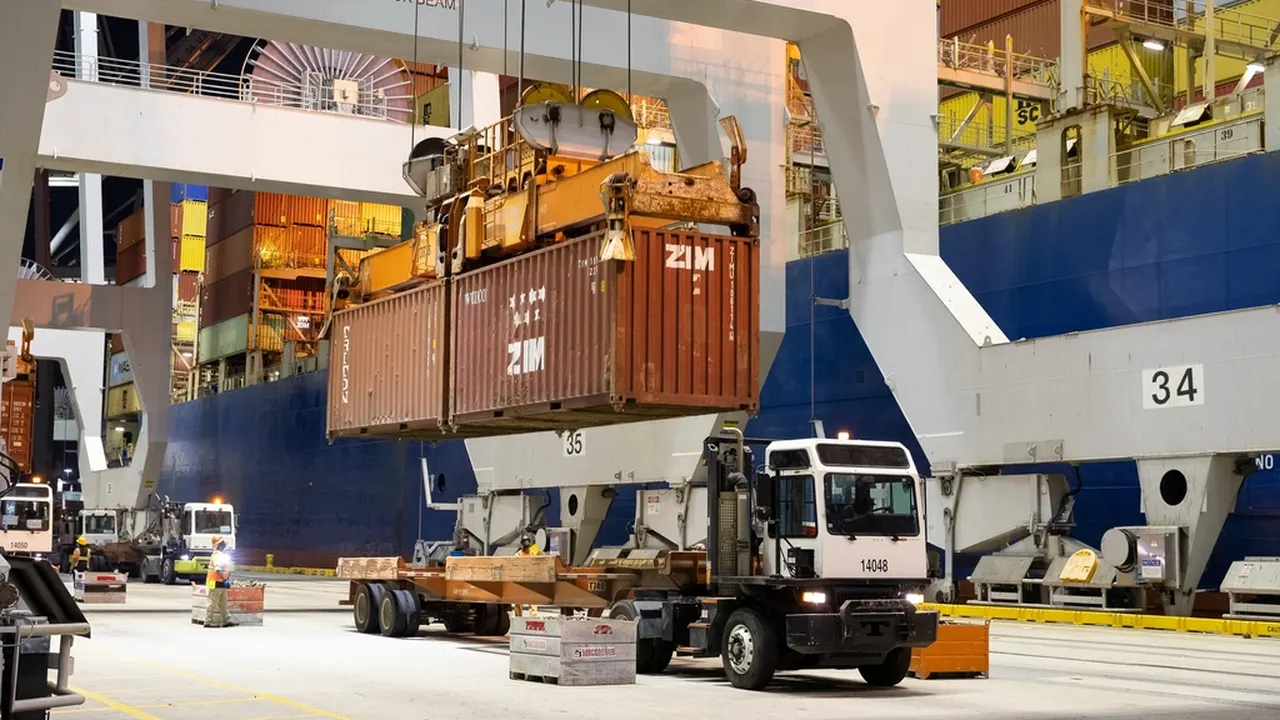
The port is undergoing its biggest change in a generation. Under a 25-year public-private partnership between Transnet and International Container Terminal Services Inc. (ICTSI), an investment of roughly $647 million that went live in January 2026, the Durban Container Terminal is being modernised, with a major emphasis on digital and API integration. That matters enormously for AI: modernised, API-accessible operational data is the raw material that route optimization, ETA prediction and gate-flow analytics run on.
The same logic applies inland. The Dube TradePort aerotropolis and the automotive and chemicals clusters generate huge volumes of sensor, quality and logistics data. The organisations that turn that data into optimization and prediction, rather than letting it sit in silos, are the ones that will convert Durban's infrastructure advantage into an operating advantage. That translation is exactly what we build.
Durban Container Terminal
- Investment in the Transnet and ICTSI partnership
- $647M
- Term of the public-private partnership
- 25 years
- Partnership went live, with a focus on digital and API integration
- Jan 2026
- Share of South Africa's container traffic through the Port of Durban
- 60 to 65%
Services
AI services we deliver in Durban
A full-stack AI capability for operations, from strategy through to running, governed systems.
AI consulting and strategy
A pragmatic roadmap that targets the throughput, downtime and forecasting problems where AI pays back fastest for a port, plant or logistics operator, and sequences delivery for early wins.
Generative AI, LLM and RAG
Document intelligence and retrieval over bills of lading, customs paperwork, SOPs and maintenance manuals: assistants that answer accurately and traceably. Explore our LLM development services.
Custom AI development
Bespoke models for route and yard optimization, ETA prediction, predictive maintenance and computer-vision quality inspection, engineered for your operational data.
Data engineering and analytics
Pipelines and unified platforms that bring port, TMS/WMS, ERP and sensor data into a single, reliable source of truth, turning modernised, API-accessible data into optimization and prediction.
Automation
Automation for documentation, exception handling, reporting and back-office logistics work. Every action logged in a full audit trail so operations stay transparent.
Cloud and on-prem AI
Deploy in the cloud or, where operational-technology security and residency require, on-premises via cloud-to-on-premises migration onto infrastructure you control, close to the plant or terminal.
Industries
Who we build for in Durban
The operators that move goods through KwaZulu-Natal.
Logistics and supply chain
Route and yard optimization, ETA prediction, exception detection and demand forecasting across the corridor.
Ports and maritime
Container and gate-flow analytics, berth and equipment scheduling, and document intelligence for customs and manifests.
Manufacturing and automotive
Industry 4.0: predictive maintenance, computer-vision quality inspection and production and OEE optimization.
Agri-processing and agri-logistics
Yield and demand forecasting, cold-chain and inventory optimization, and quality grading.
In practice
Logistics and supply-chain operators are the core: optimization and forecasting turn corridor congestion into throughput. Ports and maritime players gain from container and gate-flow analytics and document intelligence; manufacturers and automotive plants from predictive maintenance and vision-based quality; and agri-processing and agri-logistics from yield forecasting and cold-chain optimization. In every case we lead with the use case that offers the clearest, most measurable return.
Why Agility
Why Agility for Durban
Operations-grade AI
We build the optimization, prediction and document-intelligence systems that ports, plants and logistics operators actually run on, engineered for messy operational data and integrated with TMS, WMS, ERP and sensor feeds.
Fast and senior
Production in 3 to 8 weeks, staffed by senior AI/ML engineers, backed by 200+ deployments. Teams that want to grow their own capability can also hire senior AI developers to embed alongside their people.
POPIA-aware and deployable on-prem
Where operational-technology security or data residency requires it, we deploy on-premises close to the plant or terminal, with audit trails and role-based access, delivered on SAST hours with a full business-day overlap.
How it works
How engagements work
A clear path from idea to production, measured in weeks, not quarters.
- 01Days
Discovery
A free consultation and short scoping sprint to identify the highest-value use case, the data it needs and clear success measures.
- 02Short sprints
Build
Senior engineers build in short sprints on SAST hours, demoing working software at the end of each iteration so operations stay in control of direction.
- 03Weeks, not quarters
Deploy
We ship to production, your cloud, private cloud or on-premises alongside operational technology, with monitoring, audit trails and a documented handover.
FAQ
AI services in Durban: common questions
Does Agility have an office in Durban?
No. AgilityTech does not run a physical office in Durban, and we are transparent about that. Every engagement is delivered remotely by senior teams working across India, the UK and the USA, aligned to South African (SAST, UTC+2) working hours. You get real-time overlap for calls, demos and reviews during the Durban business day, without paying for a local branch you do not need.
Do you build AI for logistics, ports and supply chain?
Yes: this is our core focus in Durban. We build route and yard optimization, ETA prediction, exception detection, container and gate-flow analytics, and demand forecasting, plus document intelligence for the bills of lading, customs paperwork and manifests that move through the port. As the port modernises its digital and API integration, clean data and AI on top of it become the difference between congestion and throughput.
Can you support manufacturing and automotive plants?
Yes. For manufacturing and automotive we build Industry 4.0 systems: predictive maintenance on lines and equipment, quality inspection with computer vision, production and OEE optimization, and supply-chain forecasting. Durban and its surrounds host major automotive and chemicals production, and these are exactly the workloads where AI reduces downtime and scrap while lifting throughput.
Do you work with agri-processing and agri-logistics?
Yes. KwaZulu-Natal has a significant agri-processing and agri-logistics base, and we build demand and yield forecasting, cold-chain and inventory optimization, quality grading, and the data pipelines that unify farm, processing and distribution data. The goal is less waste, better planning and tighter, more transparent operations.
How fast can you deliver, and how do you handle data governance?
Most focused AI systems go from scoping to production in 3 to 8 weeks. POPIA compliance is built in and applies even though we deliver remotely: data minimisation, role-based access, source-citing retrieval and private-cloud or on-premises deployment where residency or operational-technology security requires it.
Do you provide AI automation in Durban?
Yes. We automate documentation, exception handling, reporting and back-office logistics work for Durban operators, from clearing and customs paperwork to yard and gate exceptions and maintenance workflows. Every automation is logged in a full audit trail, is POPIA-aware, and can run on-premises close to the plant or terminal where operational-technology security requires it.
Are you an AI consulting partner for Durban logistics and manufacturing?
Yes. Our AI consulting in Durban targets the throughput, downtime and forecasting problems where AI pays back fastest for a port, plant or logistics operator. We set a pragmatic roadmap, then our senior engineers build and integrate optimization, prediction and document-intelligence systems with your TMS, WMS, ERP and sensor feeds, in weeks rather than quarters.
Nearby
AI services elsewhere in South Africa
Ready to make your Durban operations smarter?
Book a call. We scope every engagement clearly upfront and respond within 24 hours.